Litchi
от hatemben ·
Опубликовано: 2025-11-10 01:48:43
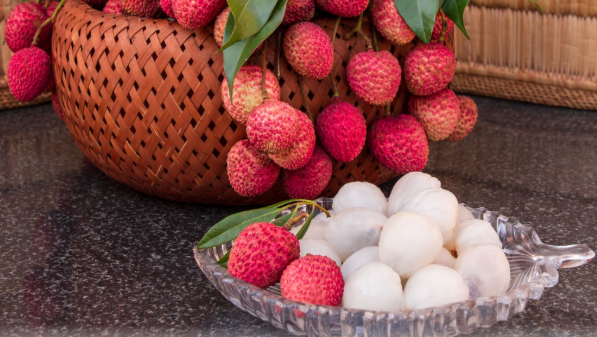
Litchi: The "Queen of Fruits"
Litchi (Litchi chinensis), commonly known as Lychee, is a sweet, succulent, and highly prized subtropical fruit. Revered as the "Queen of Fruits" in some regions, it is celebrated for its floral aroma, juicy white flesh (aril), and distinctively rough, pink-red outer shell (pericarp). It belongs to the Sapindaceae (Soapberry) family, which also includes rambutan and longan.
🌏 Origin, Cultivation, and Description
Native Range: The litchi is native to the subtropical regions of Southern China, particularly the provinces of Guangdong and Fujian, where its cultivation has been documented for over 2,000 years.
Global Distribution: Today, it is a significant commercial crop grown across Southeast Asia, the Indian Subcontinent (India being the second-largest producer after China), South Africa, Australia, and select tropical/subtropical areas worldwide.
The Tree: Litchi chinensis is a slow-growing, evergreen tree that can reach up to 15 meters (49 ft) or more in height. It thrives in a moist, subtropical climate, requiring a frost-free environment and deep, well-drained loamy soil.
The Fruit: The fruit is typically round, oval, or heart-shaped, about 1-1.5 inches in diameter. The brittle, leathery skin is inedible but easily peeled, revealing the translucent white aril, which contains one large, glossy brown, inedible seed.
✨ Flavor and Culinary Uses
The flavor of the litchi aril is uniquely sweet, juicy, and fragrant, often described as a mix of rose, watermelon, and subtle citrus notes. The texture is crisp and succulent, similar to a firm grape.
Primary Use: The fruit is overwhelmingly preferred for fresh consumption due to its exquisite flavor.
Processed Products: Its versatility allows it to be used in various products, including juices, jellies, jams, ice creams, cocktails (like the famous lychee martini), and savory dishes like salads and stir-fries.
Storage: Fresh litchi has a poor shelf life, lasting only 2-3 days at ambient temperature, but proper post-harvest treatment can extend this period
Litchi (Litchi chinensis), commonly known as Lychee, is a sweet, succulent, and highly prized subtropical fruit. Revered as the "Queen of Fruits" in some regions, it is celebrated for its floral aroma, juicy white flesh (aril), and distinctively rough, pink-red outer shell (pericarp). It belongs to the Sapindaceae (Soapberry) family, which also includes rambutan and longan.
🌏 Origin, Cultivation, and Description
Native Range: The litchi is native to the subtropical regions of Southern China, particularly the provinces of Guangdong and Fujian, where its cultivation has been documented for over 2,000 years.
Global Distribution: Today, it is a significant commercial crop grown across Southeast Asia, the Indian Subcontinent (India being the second-largest producer after China), South Africa, Australia, and select tropical/subtropical areas worldwide.
The Tree: Litchi chinensis is a slow-growing, evergreen tree that can reach up to 15 meters (49 ft) or more in height. It thrives in a moist, subtropical climate, requiring a frost-free environment and deep, well-drained loamy soil.
The Fruit: The fruit is typically round, oval, or heart-shaped, about 1-1.5 inches in diameter. The brittle, leathery skin is inedible but easily peeled, revealing the translucent white aril, which contains one large, glossy brown, inedible seed.
✨ Flavor and Culinary Uses
The flavor of the litchi aril is uniquely sweet, juicy, and fragrant, often described as a mix of rose, watermelon, and subtle citrus notes. The texture is crisp and succulent, similar to a firm grape.
Primary Use: The fruit is overwhelmingly preferred for fresh consumption due to its exquisite flavor.
Processed Products: Its versatility allows it to be used in various products, including juices, jellies, jams, ice creams, cocktails (like the famous lychee martini), and savory dishes like salads and stir-fries.
Storage: Fresh litchi has a poor shelf life, lasting only 2-3 days at ambient temperature, but proper post-harvest treatment can extend this period