Che Guevara: Revolutionary Icon and Controversial Legacy
от klach ·
Опубликовано: 2025-12-07 03:18:30
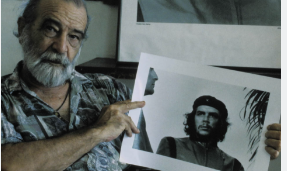
Che Guevara was an Argentine Marxist revolutionary, physician, and guerrilla leader who became one of the most iconic figures of the Cuban Revolution and global leftist movements in the 20th century.[1][5]
## Early life and education
Ernesto “Che” Guevara was born on June 14, 1928, in Rosario, Argentina, to a middle-class family of Spanish and Irish descent.[1][5] He studied medicine at the University of Buenos Aires, where he combined his academic work with extensive reading in philosophy, politics, and Marxist theory.[1]
As a young man, Guevara traveled widely across Latin America by motorcycle and other means, witnessing poverty, disease, and social injustice in rural and urban communities.[1][4] These journeys convinced him that structural inequality in the continent stemmed from imperialism and capitalist exploitation, pushing him toward revolutionary socialism as the path to change.[1][5]
## Role in the Cuban Revolution
In the mid-1950s, Guevara met Fidel and Raúl Castro in Mexico and joined their 26th of July Movement, which aimed to overthrow the US-backed Cuban dictator Fulgencio Batista.[1][3] He sailed with the rebels to Cuba in 1956 and quickly rose to become a key guerrilla commander in the Sierra Maestra mountains.[1]
Guevara developed a reputation as a strict disciplinarian and an innovative tactician, helping organize training, logistics, and political education for fighters.[1][6] He played a decisive military role in late 1958, particularly in the Battle of Santa Clara, where his forces captured the city and hastened Batista’s collapse.[1][2]
## Government positions and ideology
After the revolution’s victory in 1959, Guevara held several senior posts in the new Cuban government, including heading La Cabaña fortress prison, presidency of the National Bank, and later Minister of Industry.[1][4] In these roles he promoted rapid industrialization, land reform, and central planning, while also overseeing harsh measures against perceived enemies of the revolution, including summary executions.[1][4]
Ideologically, Guevara embraced Marxism–Leninism and argued that underdevelopment in the Global South was rooted in imperialism, neocolonialism, and monopoly capitalism.[1][3] He advocated for proletarian internationalism and believed that small, mobile guerrilla “foco” groups could ignite wider revolutions in rural areas of dependent countries.[1][5]
## International revolutionary campaigns
By the mid-1960s, Guevara grew dissatisfied with Cuba’s increasing dependence on the Soviet Union and with his own bureaucratic role.[1][6] He secretly left Cuba in 1965 to support insurgent movements abroad, seeking to expand the revolutionary wave beyond the island.[1]
Guevara first attempted to aid a rebellion in Congo-Kinshasa (now the Democratic Republic of the Congo), but the campaign failed due to weak local organization and logistical problems.[1][5] He then moved to Bolivia in 1966 to build a rural guerrilla foco, but his small force became isolated from local communists and peasants and was gradually hunted down by the Bolivian army.[1]
## Capture, death, and legacy
On October 8, 1967, Bolivian troops, supported by US intelligence, captured Guevara after a firefight in the Yuro ravine.[1][5] He was executed the following day in the village of La Higuera, and his body was initially buried in an unmarked grave before remains identified as his were returned to Cuba in 1997.[1]
Guevara’s writings, such as his guerrilla warfare manual and his travel diaries, along with the famous photograph by Alberto Korda, turned him into a global symbol of rebellion, anti-imperialism, and youth radicalism.[1][5] At the same time, critics highlight his role in political repression and executions, making his legacy deeply polarizing: for some he is a heroic martyr of social justice, while for others he embodies militant authoritarianism.[1][4]
الاقتباسات:
[1] Che Guevara https://en.wikipedia.org/wiki/Che_Guevara<\/a><\/a>
[2] تشي جيفارا - ويكيبيديا https://ar.wikipedia.org/wiki/%D8%AA%D8%B4%D9%8A_%D8%AC%D9%8A%D9%81%D8%A7%D8%B1%D8%A7<\/a><\/a>
[3] Che Guevara - Wikipedia https://en.wikipedia.org/wiki/Adolfo_Mena_Gonz%C3%A1lez<\/a><\/a>
[4] ما لا تعرفه عن تشي غيفارا .. من هو؟ سيرته الذاتية - Arageek https://www.arageek.com/bio/che-guevara<\/a><\/a>
[5] Che Guevara | Biography, Facts, Books, Fidel Castro, & ... https://www.britannica.com/biography/Che-Guevara<\/a><\/a>
[6] تشي جيفارا https://www.marxists.org/arabic/archive/guevara/bio/bio.html<\/a><\/a>
[7] Ernesto Che Guevara https://www.marxists.org/history/erol/china/che.pdf<\/a><\/a>
[8] نبذة عن القائد العسكري تشي جيفارا - موضوع https://mawdoo3.com/%D9%86%D8%A8%D8%B0%D8%A9_%D8%B9%D9%86_%D8%A7%D9%84%D9%82%D8%A7%D8%A6%D8%AF_%D8%A7%D9%84%D8%B9%D8%B3%D9%83%D8%B1%D9%8A_%D8%AA%D8%B4%D9%8A_%D8%AC%D9%8A%D9%81%D8%A7%D8%B1%D8%A7<\/a><\/a>
[9] Che Guevara: A False Idol for Revolutionaries https://arsof-history.org/articles/v4n4_false_idol_page_1.html<\/a><\/a>
[10] جيڤارا - ويكيبيديا https://arz.wikipedia.org/wiki/%D8%AC%D9%8A%DA%A4%D8%A7%D8%B1%D8%A7<\/a><\/a>
## Early life and education
Ernesto “Che” Guevara was born on June 14, 1928, in Rosario, Argentina, to a middle-class family of Spanish and Irish descent.[1][5] He studied medicine at the University of Buenos Aires, where he combined his academic work with extensive reading in philosophy, politics, and Marxist theory.[1]
As a young man, Guevara traveled widely across Latin America by motorcycle and other means, witnessing poverty, disease, and social injustice in rural and urban communities.[1][4] These journeys convinced him that structural inequality in the continent stemmed from imperialism and capitalist exploitation, pushing him toward revolutionary socialism as the path to change.[1][5]
## Role in the Cuban Revolution
In the mid-1950s, Guevara met Fidel and Raúl Castro in Mexico and joined their 26th of July Movement, which aimed to overthrow the US-backed Cuban dictator Fulgencio Batista.[1][3] He sailed with the rebels to Cuba in 1956 and quickly rose to become a key guerrilla commander in the Sierra Maestra mountains.[1]
Guevara developed a reputation as a strict disciplinarian and an innovative tactician, helping organize training, logistics, and political education for fighters.[1][6] He played a decisive military role in late 1958, particularly in the Battle of Santa Clara, where his forces captured the city and hastened Batista’s collapse.[1][2]
## Government positions and ideology
After the revolution’s victory in 1959, Guevara held several senior posts in the new Cuban government, including heading La Cabaña fortress prison, presidency of the National Bank, and later Minister of Industry.[1][4] In these roles he promoted rapid industrialization, land reform, and central planning, while also overseeing harsh measures against perceived enemies of the revolution, including summary executions.[1][4]
Ideologically, Guevara embraced Marxism–Leninism and argued that underdevelopment in the Global South was rooted in imperialism, neocolonialism, and monopoly capitalism.[1][3] He advocated for proletarian internationalism and believed that small, mobile guerrilla “foco” groups could ignite wider revolutions in rural areas of dependent countries.[1][5]
## International revolutionary campaigns
By the mid-1960s, Guevara grew dissatisfied with Cuba’s increasing dependence on the Soviet Union and with his own bureaucratic role.[1][6] He secretly left Cuba in 1965 to support insurgent movements abroad, seeking to expand the revolutionary wave beyond the island.[1]
Guevara first attempted to aid a rebellion in Congo-Kinshasa (now the Democratic Republic of the Congo), but the campaign failed due to weak local organization and logistical problems.[1][5] He then moved to Bolivia in 1966 to build a rural guerrilla foco, but his small force became isolated from local communists and peasants and was gradually hunted down by the Bolivian army.[1]
## Capture, death, and legacy
On October 8, 1967, Bolivian troops, supported by US intelligence, captured Guevara after a firefight in the Yuro ravine.[1][5] He was executed the following day in the village of La Higuera, and his body was initially buried in an unmarked grave before remains identified as his were returned to Cuba in 1997.[1]
Guevara’s writings, such as his guerrilla warfare manual and his travel diaries, along with the famous photograph by Alberto Korda, turned him into a global symbol of rebellion, anti-imperialism, and youth radicalism.[1][5] At the same time, critics highlight his role in political repression and executions, making his legacy deeply polarizing: for some he is a heroic martyr of social justice, while for others he embodies militant authoritarianism.[1][4]
الاقتباسات:
[1] Che Guevara https://en.wikipedia.org/wiki/Che_Guevara<\/a><\/a>
[2] تشي جيفارا - ويكيبيديا https://ar.wikipedia.org/wiki/%D8%AA%D8%B4%D9%8A_%D8%AC%D9%8A%D9%81%D8%A7%D8%B1%D8%A7<\/a><\/a>
[3] Che Guevara - Wikipedia https://en.wikipedia.org/wiki/Adolfo_Mena_Gonz%C3%A1lez<\/a><\/a>
[4] ما لا تعرفه عن تشي غيفارا .. من هو؟ سيرته الذاتية - Arageek https://www.arageek.com/bio/che-guevara<\/a><\/a>
[5] Che Guevara | Biography, Facts, Books, Fidel Castro, & ... https://www.britannica.com/biography/Che-Guevara<\/a><\/a>
[6] تشي جيفارا https://www.marxists.org/arabic/archive/guevara/bio/bio.html<\/a><\/a>
[7] Ernesto Che Guevara https://www.marxists.org/history/erol/china/che.pdf<\/a><\/a>
[8] نبذة عن القائد العسكري تشي جيفارا - موضوع https://mawdoo3.com/%D9%86%D8%A8%D8%B0%D8%A9_%D8%B9%D9%86_%D8%A7%D9%84%D9%82%D8%A7%D8%A6%D8%AF_%D8%A7%D9%84%D8%B9%D8%B3%D9%83%D8%B1%D9%8A_%D8%AA%D8%B4%D9%8A_%D8%AC%D9%8A%D9%81%D8%A7%D8%B1%D8%A7<\/a><\/a>
[9] Che Guevara: A False Idol for Revolutionaries https://arsof-history.org/articles/v4n4_false_idol_page_1.html<\/a><\/a>
[10] جيڤارا - ويكيبيديا https://arz.wikipedia.org/wiki/%D8%AC%D9%8A%DA%A4%D8%A7%D8%B1%D8%A7<\/a><\/a>